Inviting Lakshmi Within: 5 Yogic Practices to Cultivate Abundance This Diwali
Diwali • Yoga Philosophy • Goddess Lakshmi • Mindful Prosperity
Diwali is traditionally a celebration of light, prosperity, renewal and the blessings of Goddess Lakshmi. We illuminate our homes, clean our surroundings and offer prayers for wealth and well-being. But while preparing our homes to welcome prosperity, how often do we prepare our minds to receive it?
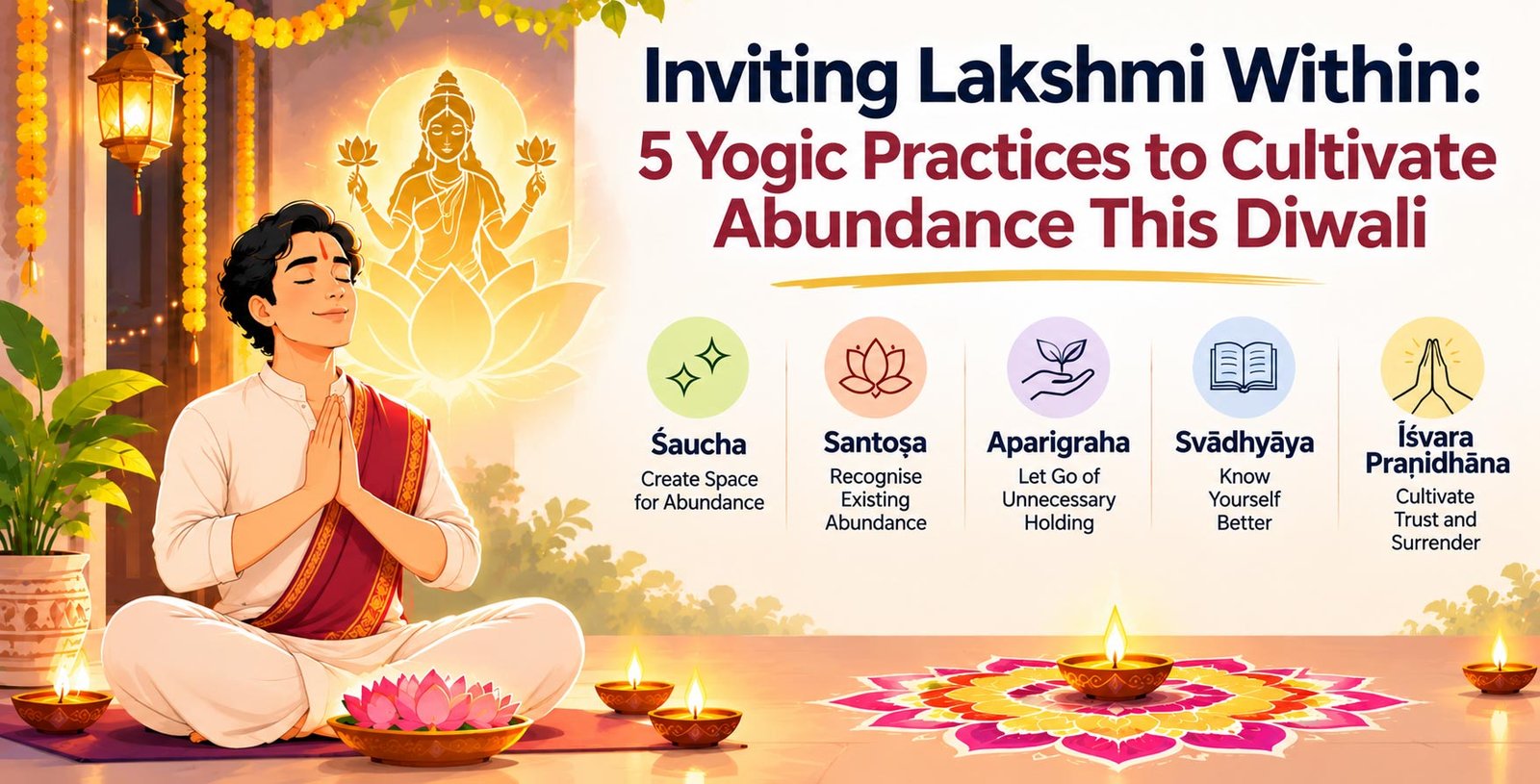
The yogic approach to abundance goes beyond accumulating wealth. It encourages us to cultivate gratitude, clarity, generosity, self-awareness and devotion. Through five practices inspired by Yoga philosophy– Śaucha, Santoṣa, Aparigraha, Svādhyāya and Īśvara Praṇidhāna– we can develop a healthier relationship with prosperity and recognise the many forms of abundance already present in our lives.
The Divine Radiance of Goddess Lakshmi
The sacred Śrī Sūktam beautifully invokes Goddess Lakshmi as the embodiment of radiance, prosperity and auspiciousness.
चन्द्रां प्रभासां यशसा ज्वलन्तीं
श्रियं लोके देवजुष्टामुदाराम्।
तां पद्मिनीमीं शरणमहं प्रपद्ये
अलक्ष्मीर्मे नश्यतां त्वां वृणे॥
Candrāṃ prabhāsāṃ yaśasā jvalantīṃ
Śriyaṃ loke devajuṣṭām udārām।
Tāṃ padminīm īṃ śaraṇam ahaṃ prapadye
Alakṣmīr me naśyatāṃ tvāṃ vṛṇe॥
– Śrī Sūktam (श्रीसूक्तम्)
Meaning: I seek refuge in Goddess Lakshmi, radiant like the moon, shining with glory, generous and revered by the divine. May misfortune and inauspiciousness disappear from my life.
This beautiful invocation reminds us that Goddess Lakshmi represents far more than monetary wealth.
Good health, meaningful relationships, knowledge, professional skills, property, opportunities, social connections, emotional stability and inner contentment are all valuable expressions of abundance.
In many Indian communities, Diwali also coincides with the post-monsoon harvest and the arrival of agricultural prosperity. Traditionally, a successful harvest meant food security, trade, household wealth and the possibility of a prosperous year ahead.
However, Diwali’s religious and cultural significance extends beyond agriculture. The worship of Goddess Lakshmi reflects the aspiration for auspiciousness, stability and well-being in every dimension of life.
The festival offers an opportunity to reflect on an important question:
Are we merely asking for prosperity, or are we also cultivating the qualities necessary to recognise, receive and responsibly sustain it?
Why Yoga and Abundance Are Connected
Yoga teaches us that our inner attitudes influence how we experience the external world.
A person may possess considerable wealth yet constantly experience dissatisfaction. Another may have fewer material possessions but enjoy good health, meaningful relationships and a deep sense of contentment.
Neither financial prosperity nor spiritual contentment needs to exclude the other.
Yoga encourages us to develop the awareness required to use material resources wisely without becoming excessively attached to them.
The Yoga Sūtras of Patañjali describe the Yamas and Niyamas as ethical and personal disciplines that support a balanced life.
Five of these principles offer particularly meaningful practices during Diwali.
5 Yogic Practices to Cultivate Abundance This Diwali:
Śaucha – Create Space for Abundance
Yogic principle: Cleanliness and purity
Diwali preparations traditionally begin with cleaning our homes, removing unnecessary possessions and refreshing our living spaces.
Śaucha, one of the five Niyamas, extends this idea beyond physical cleanliness to the cultivation of mental clarity.
Our minds can become cluttered with unresolved emotions, resentment, comparisons, unrealistic expectations and unnecessary worries.
These patterns may prevent us from appreciating opportunities and resources already available to us.
Practice: Five Minutes of Conscious Decluttering
* Choose one small physical space, such as your desk, cupboard or meditation corner.
* Spend three minutes cleaning and organising it.
* Sit quietly for two minutes and identify one unnecessary mental burden.
* Ask yourself: Is this thought helping me grow, or am I holding on to something that no longer serves me?
Practical application: Reduce physical clutter, acknowledge unresolved emotions and gradually release excessive expectations.
Connection with abundance: A clearer environment and a less distracted mind can support better decisions, greater awareness and a more intentional use of resources.
2. Santoṣa – Recognise Existing Abundance
Yogic principle: Contentment
One of the greatest obstacles to experiencing abundance is the habit of constantly focusing on what we lack.
We may overlook good health, supportive relationships, professional achievements and everyday comforts while pursuing the next financial or material milestone.
Santoṣa encourages us to recognise the value of what is already present without abandoning our aspirations for growth.
Patañjali states:
सन्तोषादनुत्तमसुखलाभः॥
Santoṣād anuttama-sukha-lābhaḥ.
Yoga Sūtra 2.42
From contentment arises unsurpassed happiness.
Practice: Three Blessings Every Morning
Begin your day by writing down three things for which you feel grateful.
For example:
* My body allows me to work, move and experience life.
* I have people who support and care for me.
* I possess knowledge and skills that create opportunities.
Spend a few moments genuinely acknowledging their value.
Practical application: Replace habitual comparison with appreciation, without becoming complacent.
Connection with abundance: Gratitude helps us recognise existing resources while continuing to work towards meaningful goals.
3. Aparigraha – Practise Generosity and Non-Possessiveness
Yogic principle: Non-grasping and non-possessiveness
We often associate prosperity with acquiring more possessions, money and recognition.
However, Aparigraha reminds us that excessive attachment can create insecurity, fear and dissatisfaction.
The purpose of wealth is not merely accumulation. Wealth also becomes meaningful through responsible use, sharing and contribution.
Generosity does not require financial extravagance. Sometimes, sharing knowledge, offering support or giving someone our time can be equally valuable.
Practice: One Conscious Act of Giving
During Diwali, choose one meaningful act of generosity.
You could donate a useful possession, support someone financially within your means, teach a skill without charging a fee or offer your time to someone who needs assistance.
Perform the act without expecting appreciation, recognition or a favour in return.
Practical application: Develop generosity while maintaining healthy financial boundaries.
Connection with abundance: Aparigraha encourages a balanced relationship with possessions, helping us appreciate wealth without allowing it to become the centre of our identity.
4. Svādhyāya – Examine Your Relationship with Wealth
Yogic principle: Self-study and introspection
Our relationship with money and prosperity is influenced by childhood experiences, family beliefs, social expectations and personal ambitions.
Some people associate wealth with security. Others associate it with freedom, status, responsibility or fear of loss.
Without self-awareness, these beliefs may influence spending, saving, professional choices and emotional well-being.
Svādhyāya invites us to examine these patterns.
Practice: Five Minutes of Reflective Journaling
Sit quietly and write your response to the question:
What does prosperity mean to me beyond money?
Explore three additional questions:
* Which forms of abundance are already present in my life?
* Do my financial habits reflect my values and priorities?
* What skill, habit or relationship can I consciously nurture to improve my future?
Avoid judging your answers. The purpose is understanding rather than self-criticism.
Practical application: Recognise limiting beliefs, examine unconscious spending habits and identify meaningful financial priorities.
Connection with abundance: Self-awareness supports more intentional choices and helps align material prosperity with personal values.
5. Īśvara Praṇidhāna – Cultivate Reverence and Trust
Yogic principle: Devotion and surrender to the Divine
Prosperity often requires effort, planning, discipline and perseverance.
Yet many outcomes remain beyond our complete control.
Īśvara Praṇidhāna teaches us to act sincerely while cultivating humility and reducing excessive attachment to results.
During Diwali, contemplation of Goddess Lakshmi can become a meaningful spiritual practice that connects material aspirations with gratitude, reverence and responsibility.
Practice: Five Minutes of Lakshmi Contemplation and Mantra Japa
* Sit comfortably in a quiet space, preferably near a safely placed Diwali lamp.
* Close your eyes and take a few natural, gentle breaths.
* Contemplate Goddess Lakshmi as the embodiment of auspiciousness, prosperity and well-being.
* Chant the following mantra 11 or 21 times:
ॐ श्रीं महालक्ष्म्यै नमः॥
Om Śrīṃ Mahālakṣmyai Namaḥ.
5. Conclude with a moment of gratitude and a sincere intention to use your resources wisely.
Practical application: Cultivate humility, devotion, trust and responsibility towards prosperity.
Connection with abundance: Devotional practice can help us approach our aspirations with greater steadiness, gratitude and a sense of purpose.
Understanding the Five Practices at a Glance
| Yogic Principle | Inner Quality | Daily Practice |
|---|---|---|
| Śaucha | Clarity | Clear one physical or mental burden |
| Santoṣa | Contentment | Write three blessings |
| Aparigraha | Generosity | Perform one act of giving |
| Svādhyāya | Self-awareness | Reflect on your relationship with wealth |
| Īśvara Praṇidhāna | Devotion | Practise Lakshmi mantra japa |
How to Make These Practices Part of Your Diwali
These practices need not become another complicated spiritual routine.
You can begin a commitment of approximately 20–25 minutes.
Start by clearing your surroundings and observing your thoughts. Follow this with gratitude journaling and self-reflection. Make a conscious decision to share something valuable, and conclude with a few minutes of mantra japa.
The important element is not the duration of the practice but the sincerity and consistency with which it is performed.
After Diwali, continue at least one of these habits for the next 21 days. This can help you explore how a small spiritual discipline fits into everyday life.
Three Mistakes to Avoid When Cultivating Abundance
1. Confusing contentment with lack of ambition
Santoṣa does not mean abandoning financial growth or professional aspirations. It encourages us to pursue progress without making happiness entirely dependent on future achievements.
2. Believing spiritual practices guarantee material wealth
Mantra, meditation and positive intentions can support reflection, emotional balance and purposeful action. They do not guarantee financial success or eliminate the need for planning, effort and practical decisions.
3. Practising generosity without boundaries
Aparigraha encourages non-attachment, not financial irresponsibility. Giving should arise from awareness and compassion rather than guilt, social pressure or a desire for recognition.
A Practical Example: Bringing Abundance into Everyday Life
Consider someone who is professionally successful but constantly feels that their achievements are insufficient.
Their home is filled with unused possessions, their mind is occupied with comparisons, and their financial goals keep expanding without providing satisfaction.
By practising Śaucha, they begin creating a more organised environment.
Through Santoṣa, they acknowledge their existing achievements and relationships.
Aparigraha encourages them to share their resources without seeking recognition.
Svādhyāya helps them examine whether their ambitions genuinely reflect their values.
Finally, Īśvara Praṇidhāna provides an opportunity to cultivate devotion, humility and acceptance.
Their financial circumstances may not change immediately. However, their relationship with prosperity can become more balanced, conscious and meaningful.
This is one of the valuable contributions Yoga can make to modern life.
Your Diwali Abundance Checklist
Five mindful actions:
0 of 5 completed
Clear one physical space and identify one mental burden
Write down three blessings
Perform one meaningful act of generosity
Reflect on what prosperity means beyond money
Chant Om Śrīṃ Mahālakṣmyai Namaḥ 11 or 21 times
Reset checklist!
Frequently Asked Questions
1. What is the spiritual meaning of abundance in Yoga?
Abundance in a yogic context can be understood as a balanced experience of well-being, contentment, meaningful relationships, knowledge and responsible material prosperity.
2. Why is Goddess Lakshmi worshipped during Diwali?
Goddess Lakshmi is traditionally worshipped as the embodiment of prosperity, auspiciousness and well-being. Her worship expresses gratitude and aspirations for a prosperous life.
3. Is Diwali connected with the harvest season?
Yes. In several regions of India, Diwali coincides with the post-monsoon harvest and agricultural prosperity. However, its religious and cultural traditions have several other origins and interpretations.
4. Can Yoga help improve financial well-being?
Yoga does not directly create wealth, but practices involving self-awareness, discipline and emotional regulation may support healthier financial behaviours and more thoughtful decisions.
5. What is the connection between Santoṣa and prosperity?
Santoṣa teaches us to appreciate existing resources and achievements while continuing to pursue meaningful growth.
6. How does Aparigraha relate to money?
Aparigraha encourages responsible ownership, reduced possessiveness and freedom from excessive attachment to material possessions.
7. What is the significance of the Lakshmi mantra?
Om Śrīṃ Mahālakṣmyai Namaḥ is a devotional invocation of Goddess Mahalakshmi, traditionally associated with prosperity and auspiciousness.
8. Can these practices be performed without elaborate rituals?
Yes. Gratitude journaling, mindful decluttering, generosity and self-reflection can be practised independently of elaborate rituals.
9. How long should I practise these techniques?
You can begin with 15–25 minutes daily and adjust the duration according to your routine.
10. Can these practices continue after Diwali?
Certainly. Although Diwali provides a meaningful occasion to begin, these yogic principles are intended to guide everyday living throughout the year.
Conclusion: Become a Worthy Abode of Abundance
Diwali reminds us that light is not merely something we illuminate outside; it is also a quality we can cultivate within.
The worship of Goddess Lakshmi need not remain limited to rituals, decorations and prayers for material prosperity.
It can become an opportunity to examine how consciously we live, how gratefully we receive, how responsibly we use our resources and how generously we share them.
Śaucha creates clarity. Santoṣa nurtures contentment. Aparigraha develops generosity. Svādhyāya deepens self-awareness. Īśvara Praṇidhāna cultivates devotion and trust.
Together, these practices help us develop a more meaningful relationship with abundance.
This Diwali, do not merely invite Goddess Lakshmi into your home. Cultivate the qualities that make your life a worthy abode of abundance.
When we become more receptive through gratitude, awareness and purposeful action, we may begin to recognise opportunities and blessings that previously went unnoticed.
May this Diwali bring not only material prosperity but also good health, meaningful relationships, inner clarity and lasting contentment.
Happy Diwali!
– Omkar Gotkhindikar
Yoga Therapy Consultant | Athatoyoga
Explore more reflections on Yoga, mindfulness and everyday well-being at athatoyoga