Yoga for Healthy Aging: Adding Life to Years
Ageing is a continuous process that we all experience. So accustomed have we become to our daily routines and lifestyles that we often fail to notice the subtle signs and signals of ageing. Then comes a stage in life when even simple activities, such as climbing stairs or carrying out routine tasks, become challenging. Yoga, an ancient science of wisdom, offers profound insights into the ageing process and shows us how to age gracefully, healthily, and meaningfully.
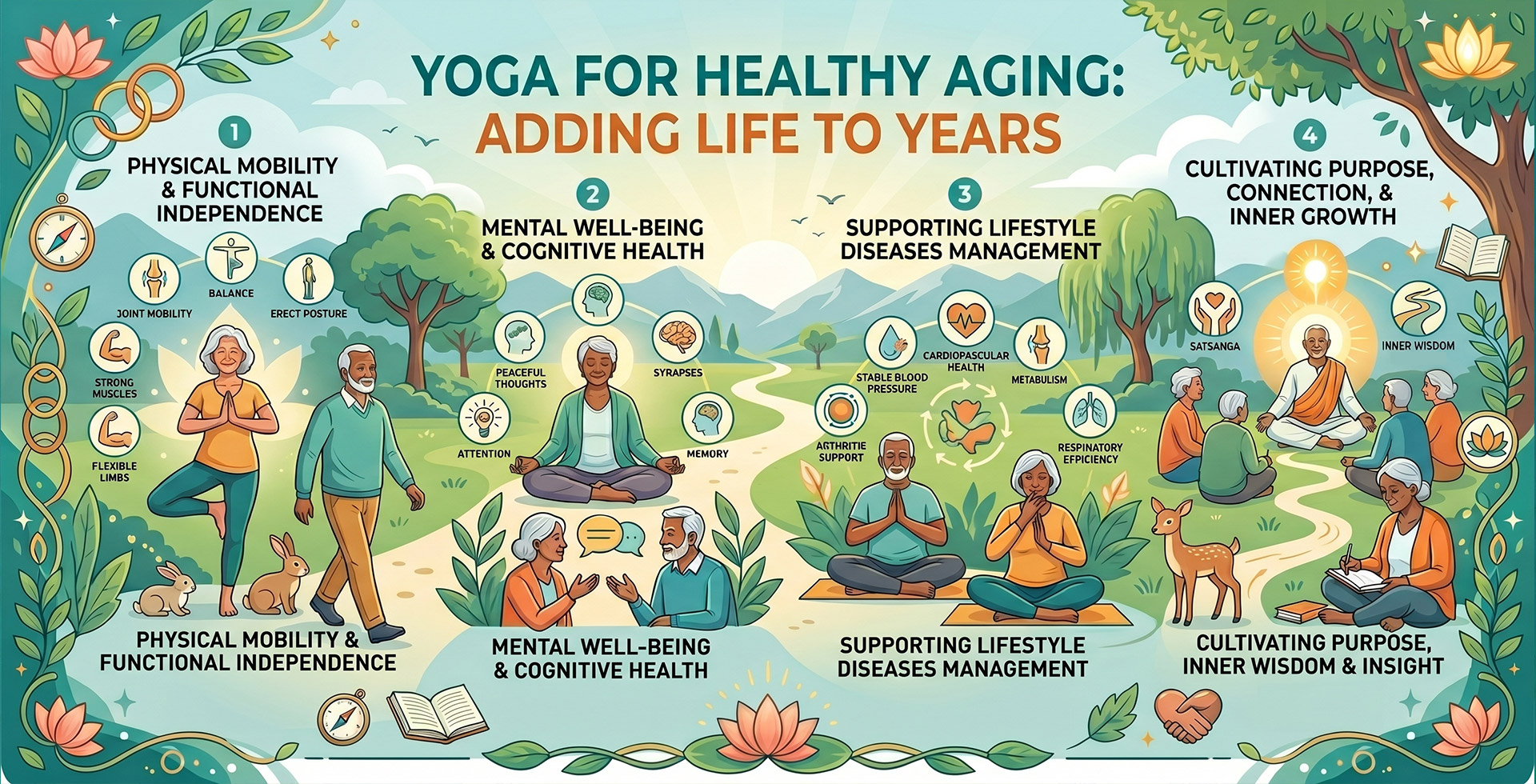
Physical Mobility and Functional Independence
In today’s largely sedentary lifestyle, combined with increasingly demanding daily schedules, the body is often subjected to significant physical and mental stress. Over time, this can lead to stiffness, reduced flexibility, loss of muscle strength, and a growing prevalence of neuromuscular disorders, even among younger individuals.
Regular yoga practice improves joint mobility, balance, posture, and muscular endurance. Āsanas help older adults maintain independence in daily activities such as walking, climbing stairs, and performing routine tasks. Yoga also enhances proprioception (body awareness), coordination, and balance. Standing postures and mindful movement cultivate confidence in movement and help reduce the fear of falling.
Mental Well-being and Cognitive Health
Modern life has become increasingly achievement-oriented. We often move from one task to another without pause, leaving little time to slow down, reflect, or settle the mind. As a result, many people find themselves caught in cycles of stress, anxiety, and depression.
Practices such as meditation, prāṇāyāma, mantra chanting, and mindfulness help calm the mind and reduce psychological distress. Research also suggests that yoga may support memory, attention, and overall cognitive function, helping individuals maintain mental sharpness and emotional balance as they age.
Supporting the Management of Lifestyle Diseases
Living under constant stress and pressure often contributes to the development of various lifestyle-related and psychosomatic disorders. Conditions such as hypertension, diabetes, obesity, arthritis, and cardiovascular disease become increasingly common with advancing age.
Yogic practices can complement medical care by improving circulation, metabolism, respiratory efficiency, and stress management. The holistic approach of yoga addresses not only symptoms but also many of the underlying factors that contribute to chronic health conditions.
Cultivating Purpose, Connection, and Inner Growth
Yogic literature views ageing not as a period of decline, but as an opportunity for wisdom, self-discovery, and inner growth. Traditionally, this phase corresponds to Vānaprastha Āśrama, gradually preparing one for the contemplative spirit of Sannyāsa Āśrama.
Practices such as meditation, svādhyāya (self-reflection), and satsaṅga foster emotional resilience, self-understanding, and a deeper sense of meaning. Healthy ageing is not merely about adding years to life; it is about adding life, dignity, fulfillment, and purpose to those years. It is also a time to give back to society through the sharing of one’s knowledge, experience, insight, and wisdom.
As we celebrate International Yoga Day under the theme “Yoga for Healthy Aging,” let us remember that the true goal of yoga is not merely longevity, but a healthier, happier, and more meaningful life at every stage of our journey.