From Emptiness to Harmony: Aligning Thought, Speech, and Action
In my counseling sessions, I often encounter a common concern: people begin to feel an inner emptiness after reaching a certain stage or experience in life.
Everything may appear to be in place-career, relationships, comfort-yet there remains a persistent sense that something is missing. In an attempt to fill this void, many turn toward alcohol, smoking, substance use, or other unhealthy coping mechanisms. Over time, this only deepens the problem, creating a downward spiral.
This sense of emptiness often arises as we drift away from our true self. The result is inner disharmony.
But what does harmony within actually mean?It is not a complex or abstract idea. Harmony is experienced as a state of ease, happiness, satisfaction, contentment, joy, and even bliss. It is the inner atmosphere that naturally supports creativity and productivity.
The next question is: how do we maintain this inner harmony?
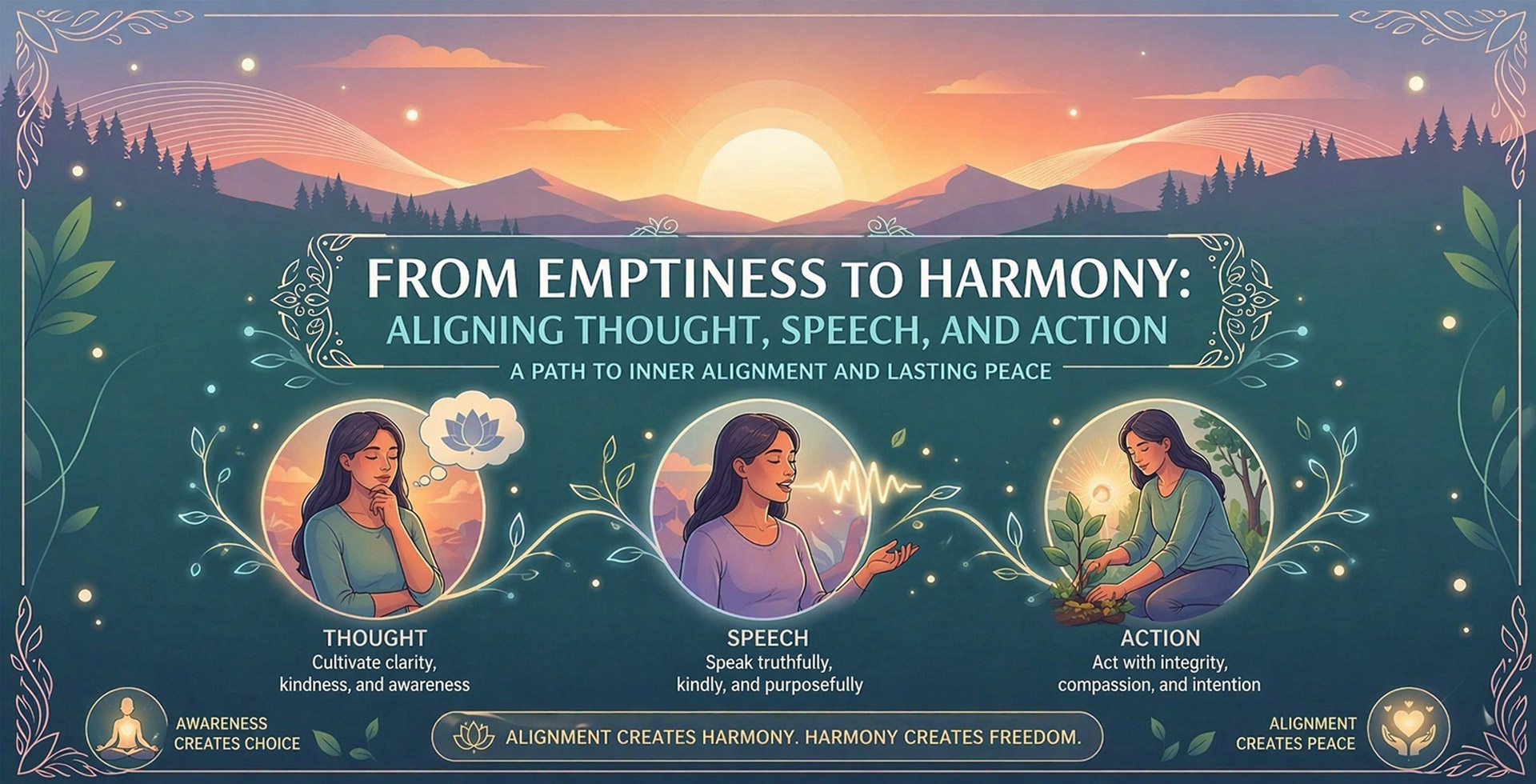
Yoga philosophy offers a simple yet profound answer-balance in three dimensions of karma:
Kayika Karma (physical actions)
Vachika Karma (speech)
Manasika Karma (thoughts)
When what we think, what we say, and what we do are aligned, there is no internal gap or contradiction. It is this gap that creates turmoil within.
Is it possible to maintain such balance?
Yes-but it requires awareness. By recognizing our own patterns and personality flaws, and consciously working to refine them, we gradually move toward alignment. This is the essence of various sadhanas.
Here is one simple and practical method that anyone can apply:
The Pause–Observe–Respond Practice
This practice helps bring alignment between thought, speech, and action.
How to do it:
Pause before reacting (even 2–3 seconds is enough)
Observe: What am I thinking? What am I feeling? What is my intention?
Respond consciously, instead of reacting impulsively
Why it works:
It breaks automatic behavioral patterns
It creates a gap between impulse and action
It makes speech more measured and less reactive
Where to apply it:
Use this especially in conversations, conflicts, and decision-making situations-these are the moments where imbalance tends to surface first.