Yoga for Digital Fatigue: 8 Effective Yoga Practices to Relieve Screen Fatigue Naturally
Over the last few years, digital fatigue has become a common problem among the urban population and is now increasingly affecting a large section of the rural population as well. With work, education, entertainment, and social interactions becoming more dependent on digital devices, many people are experiencing physical, mental, and emotional exhaustion without realizing its cause.
What is Digital Fatigue?
Digital fatigue is the mental, emotional, and sometimes physical tiredness that results from prolonged use of digital devices such as computers, smartphones, tablets, and video conferencing platforms. It is also commonly referred to as screen fatigue or digital exhaustion.
Digital fatigue can develop due to:
- Prolonged exposure to digital screens
- Multitasking across multiple apps or devices
- Constant notifications and information overload
- Frequent video meetings that require sustained attention
- Not taking regular breaks during work or study
- Exposure to blue light, particularly during the evening and at night
Common Symptoms of Digital Fatigue
Some of the common symptoms include:
- Eye strain, dry eyes, or blurred vision
- Headaches
- Difficulty concentrating
- Feeling mentally drained or overwhelmed
- Increased irritability and reduced motivation
- Disturbed sleep, especially after evening screen use
- Feeling exhausted after long video calls
Yoga Offers an Effective Remedy for Digital Fatigue
Yoga provides a holistic approach to reducing the physical and mental effects of excessive screen time. The following practices can help restore balance and improve overall well-being.
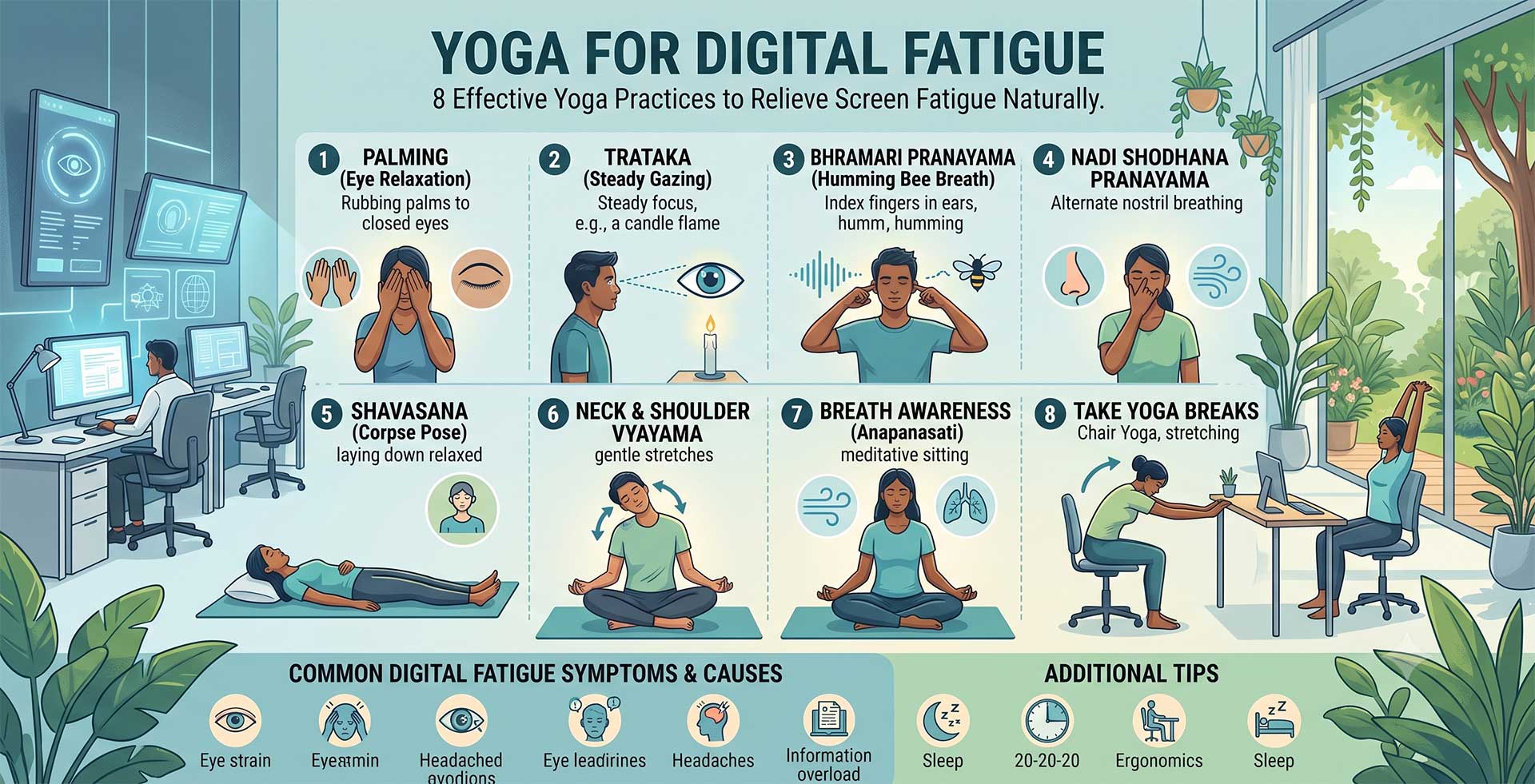
1. Palming (Yoga Eye Relaxation)
Rub your palms together until they become warm and gently cup them over your closed eyes. This simple practice relaxes the eye muscles, reduces eye strain, and provides immediate relief from visual fatigue. Chanting Om or practicing Bhramari Pranayama during palming can enhance its calming effect.
2. Trataka (Steady Gazing)
Trataka improves concentration, reduces scattered attention, and gives the eyes a break from constantly shifting focus on digital screens. Jathru Trataka during the daytime and Jyothi Trataka during the evening are beneficial for improving the functioning of the eyes.
3. Bhramari Pranayama (Humming Bee Breath)
Bhramari helps reduce mental stress, calms the nervous system, and relieves screen-induced irritability. Regular practice also promotes better sleep quality.
4. Nadi Shodhana Pranayama
Nadi Shodhana balances the activity of both hemispheres of the brain, improves focus, and reduces mental fatigue caused by prolonged digital work. It also lowers stress levels and enhances mental clarity.
5. Shavasana (Corpse Pose)
Shavasana relaxes the entire body, releases muscular tension, and restores both physical and mental energy. Relaxation techniques such as IRT (Instant Relaxation Technique), QRT (Quick Relaxation Technique), DRT (Deep Relaxation Technique), and Yoga Nidra are highly effective in releasing accumulated stress.
6. Neck and Shoulder Sukshma Vyayama
Gentle neck and shoulder movements help reduce stiffness and improve blood circulation to the areas most affected by prolonged screen use. These practices also help prevent a hunched posture and other postural imbalances.
7. Breath Awareness (Anapanasati)
Spending just five minutes observing the natural flow of the breath helps reduce mental clutter, improves present-moment awareness, calms the mind, and enhances decision-making ability.
8. Take Yoga Breaks Every 60–90 Minutes
Take a 3–5 minute break every 60–90 minutes to stand, stretch, breathe deeply, and gently mobilize the spine. This prevents fatigue from building up throughout the day. Chair Yoga practices, including Chair Surya Namaskara, are especially helpful for people working at desks.
Additional Tips to Reduce Digital Fatigue
- Follow the 20-20-20 rule: Every 20 minutes, look at something 20 feet away for 20 seconds.
- Limit unnecessary notifications.
- Schedule screen-free periods during the day.
- Maintain proper lighting and good screen ergonomics.
- Reduce screen time before bedtime.
- Alternate digital work with offline activities whenever possible.
Technology has become an integral part of modern life, and its benefits are undeniable. However, we always have the choice to use it wisely without compromising our physical, mental, and emotional well-being. By incorporating simple yoga practices into our daily routine, we can effectively reduce digital fatigue, restore balance, and maintain better health in the digital age.