The Path of Naamjapa: A Simple Way to Spiritual Growth
The human mind is so restless and volatile that bringing it to a state of silence requires a dedicated and sustained process. Although the science of Yoga offers numerous techniques and methods to achieve this goal, one must cultivate abhyāsa (practice) and vairāgya (detachment) over a long period of time.
For a sannyāsī, who has consciously withdrawn from worldly engagements, this path may be relatively convenient. However, for those following the path of gṛhasthāśrama-a householder’s life filled with responsibilities, relationships, and duties-there must be a practical way to progress spiritually while remaining engaged in the world. One such path is Nāmajapa (chanting the Divine Name).
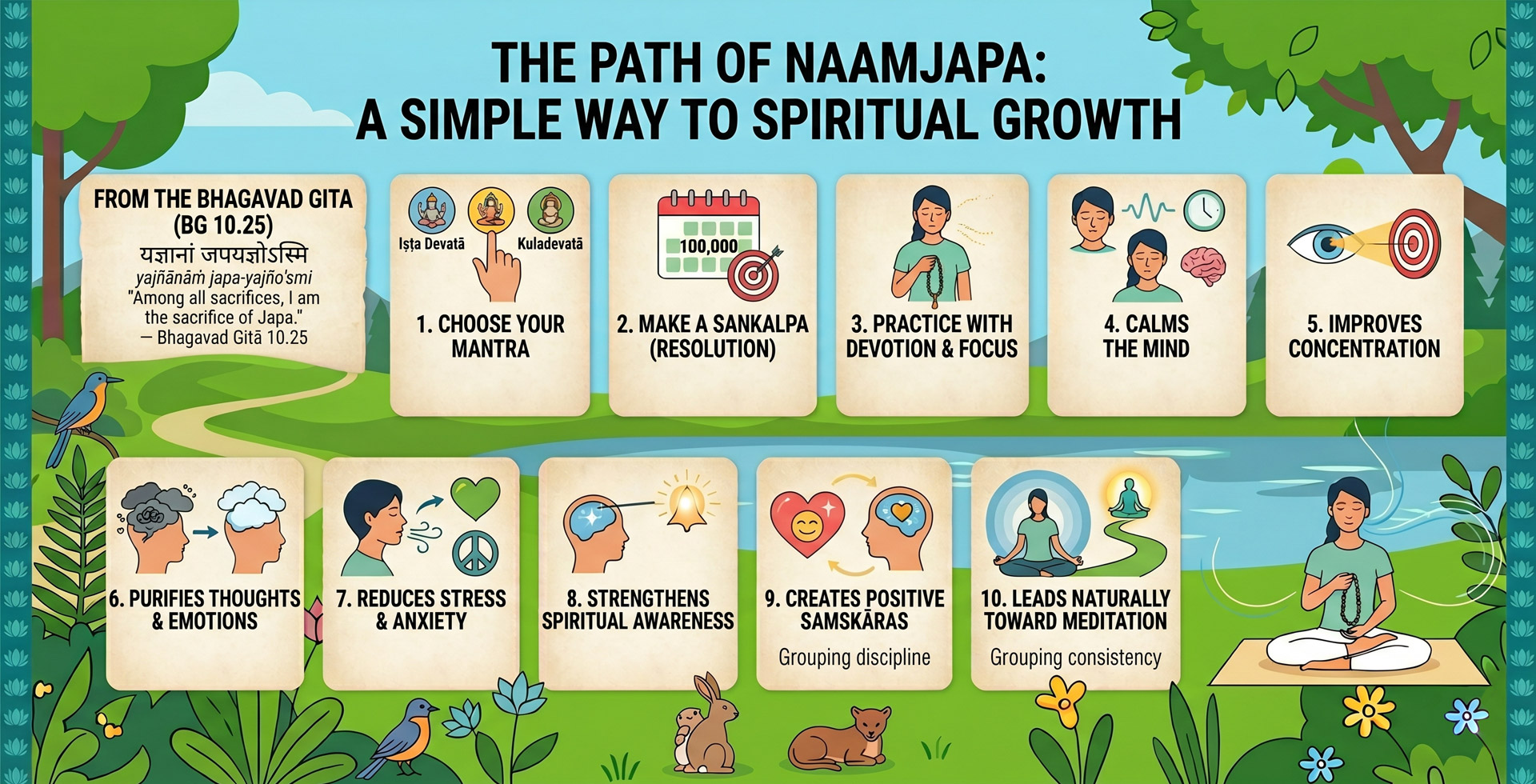
In the Bhagavad Gītā, Lord Krishna assures Arjuna:
यज्ञानां जपयज्ञोऽस्मि
yajñānāṁ japa-yajño’smi
“Among all sacrifices, I am the sacrifice of Japa.”
— Bhagavad Gītā 10.25
This profound statement highlights that regular Japa itself is a divine act and one of the most accessible ways to approach the Divine.
Sant Dnyaneshwar beautifully expresses the same truth in an abhang:
एक तत्त्व नाम दृढ धरी मना ।
हरिसी करुणा येईल तुझी ॥
Ek tattva nāma dṛḍha dharī manā,
Harisī karuṇā yeīl tujhī.
“Hold firmly to the Divine Name in your mind; the grace of Hari will surely descend upon you.”
What a simple and beautiful way to explain a profound spiritual truth for ordinary seekers!
How Should a Beginner Start Japa?
1. Choose Your Mantra
First, decide which mantra you wish to chant. It may be associated with your Iṣṭa Devatā (chosen deity), Kuladevatā (family deity), or any divine form towards whom you feel devotion.
Understand the meaning and significance of the mantra. Reflect upon it and contemplate its deeper message.
2. Make a Sankalpa (Resolution)
Take a clear saṅkalpa regarding your practice.
– How many rounds of Japa will you perform daily?
– What is your long-term goal?
Some practitioners undertake a saṅkalpa of completing one lakh (100,000) repetitions or more within a specific period, such as six months. Plan your daily rounds accordingly.
3. Practice with Devotion and Focus
At a fixed time each day, sit quietly with your japamālā.
– Remember the deity associated with the mantra.
– Contemplate its meaning.
– Repeat the mantra with attention and devotion.
The chanting need not be loud; what matters is steadiness, awareness, and sincerity.
Benefits of Japa
1. Calms the Mind
Regular Japa slows the restless activity of the mind and helps cultivate inner peace.
2. Improves Concentration
Repetition of a mantra trains the mind to remain focused and attentive.
3. Purifies Thoughts and Emotions
Sacred sound vibrations gradually transform negative tendencies into positive qualities.
4. Reduces Stress and Anxiety
Japa activates relaxation responses and creates emotional stability.
5. Strengthens Spiritual Awareness
It keeps the mind connected with the Divine and deepens devotion.
6. Develops Discipline and Consistency
Daily Japa cultivates self-control, patience, and commitment to spiritual practice.
7. Creates Positive Saṁskāras
Repeated chanting leaves uplifting impressions on the mind, positively influencing behaviour and character.
8. Leads Naturally Toward Meditation
As the mantra becomes steady and effortless, the mind gradually enters deeper states of meditation.
The path of Japa is simple, profound, and accessible to everyone. It does not require withdrawal from society or complex spiritual disciplines. Whether one is a monk or a householder, sincere repetition of the Divine Name gradually purifies the mind, awakens devotion, and leads the seeker toward inner peace and spiritual realization.
“Keep the Divine Name alive in the heart, and the Divine Presence will reveal itself.”