10 Tips for a Deeper and More Effective Pranayama Practice
10 Tips for a Deeper and More Effective Pranayama Practice
प्राणस्येदं वशे सर्वं त्रिदिवे यत्प्रतिष्ठितम् ।
मातेव पुत्रान् रक्षस्व श्रीश्च प्रज्ञां च विधेहि न इति ॥
prāṇasyedaṃ vaśe sarvaṃ tridive yat pratiṣṭhitam |
māteva putrān rakṣasva śrīś ca prajñāṃ ca vidhehi na iti ||
What ever exists in three worlds, Is all under the control of Prana.
Hey Prana, Please protect us as a mother protects her sons,
Give us affluence and intelligence.
This beautiful prayer from Prashna upanishad gives deeper understanding about Prana i.e. vital energy.
Pranayama is not merely a breathing exercise; it is the art of regulating prana – the vital life force. A mindful practice can transform not only the breath, but also the nervous system, emotions, and clarity of mind. Here are 10 practical tips to deepen and improve your pranayama practice.
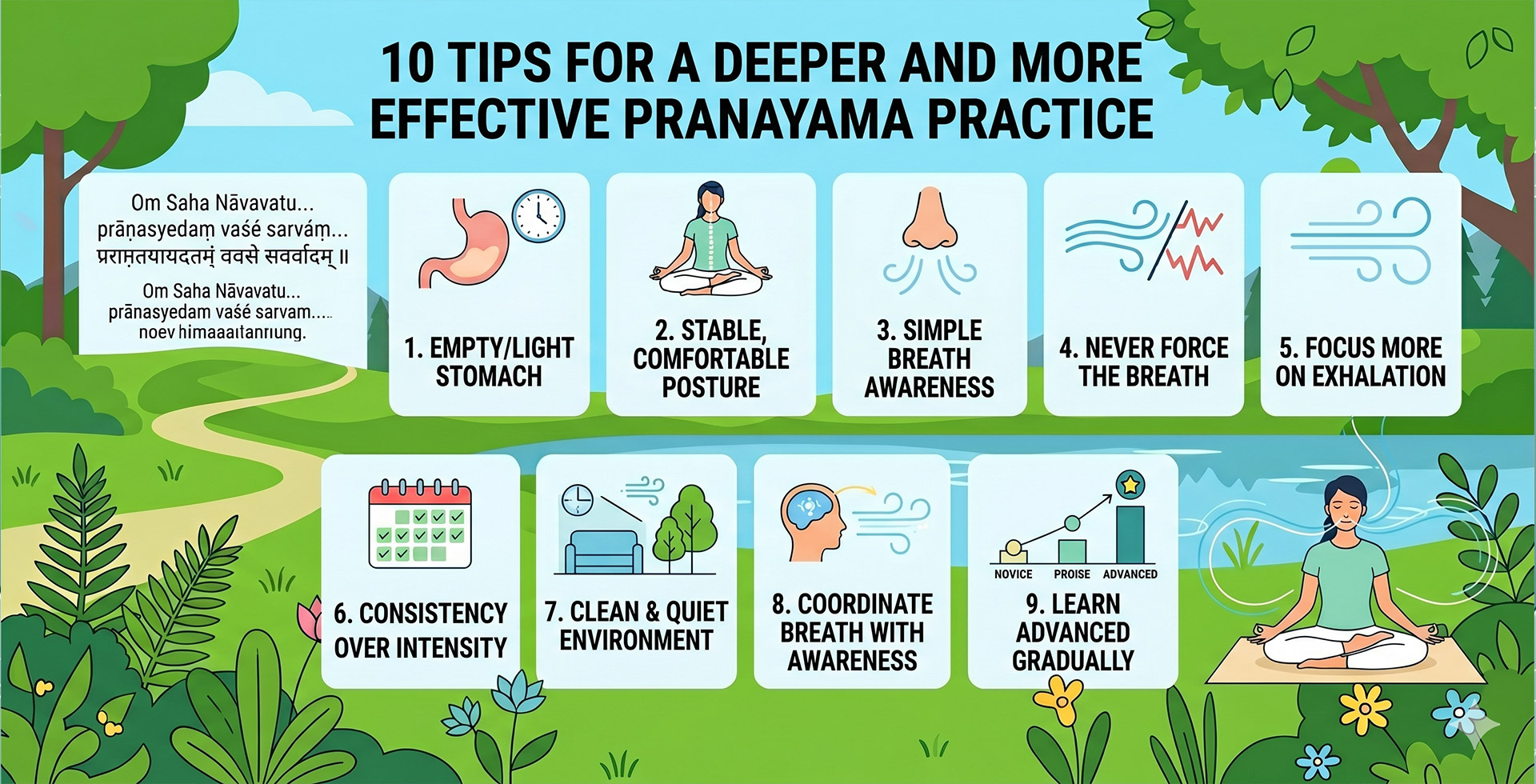
1. Practice on an Empty or Light Stomach
Ideal time for Pranayama practice is early morning or post any meal after 3 hours . A heavy stomach restricts diaphragmatic movement and reduces comfort during deeper breathing practices.
2. Sit with a Stable and Comfortable Posture
Your spine should remain naturally erect without stiffness and shoulders relaxed. Whether sitting in Sukhasana, Vajrasana, Padmasana or on a chair, stability in posture allows the breath to flow more freely and keeps the mind alert.
3. Begin with Simple Breath Awareness
Before advanced techniques, simply observe your natural breath for a few minutes by keeping awareness at the tip of the nostrils and then following it .Awareness itself calms the nervous system and prepares the mind for deeper pranayama.
4. Never Force the Breath
Pranayama is about conscious regulation, not aggression. Over-forcing inhalation, exhalation, or retention can create dizziness, anxiety, or strain in the nervous system. The breath should become deeper gradually.
5. Focus More on Exhalation
A slow and complete exhalation activates relaxation responses in the body. Many people inhale deeply but exhale incompletely, which creates tension accumulation over time.
6. Maintain Consistency Over Intensity
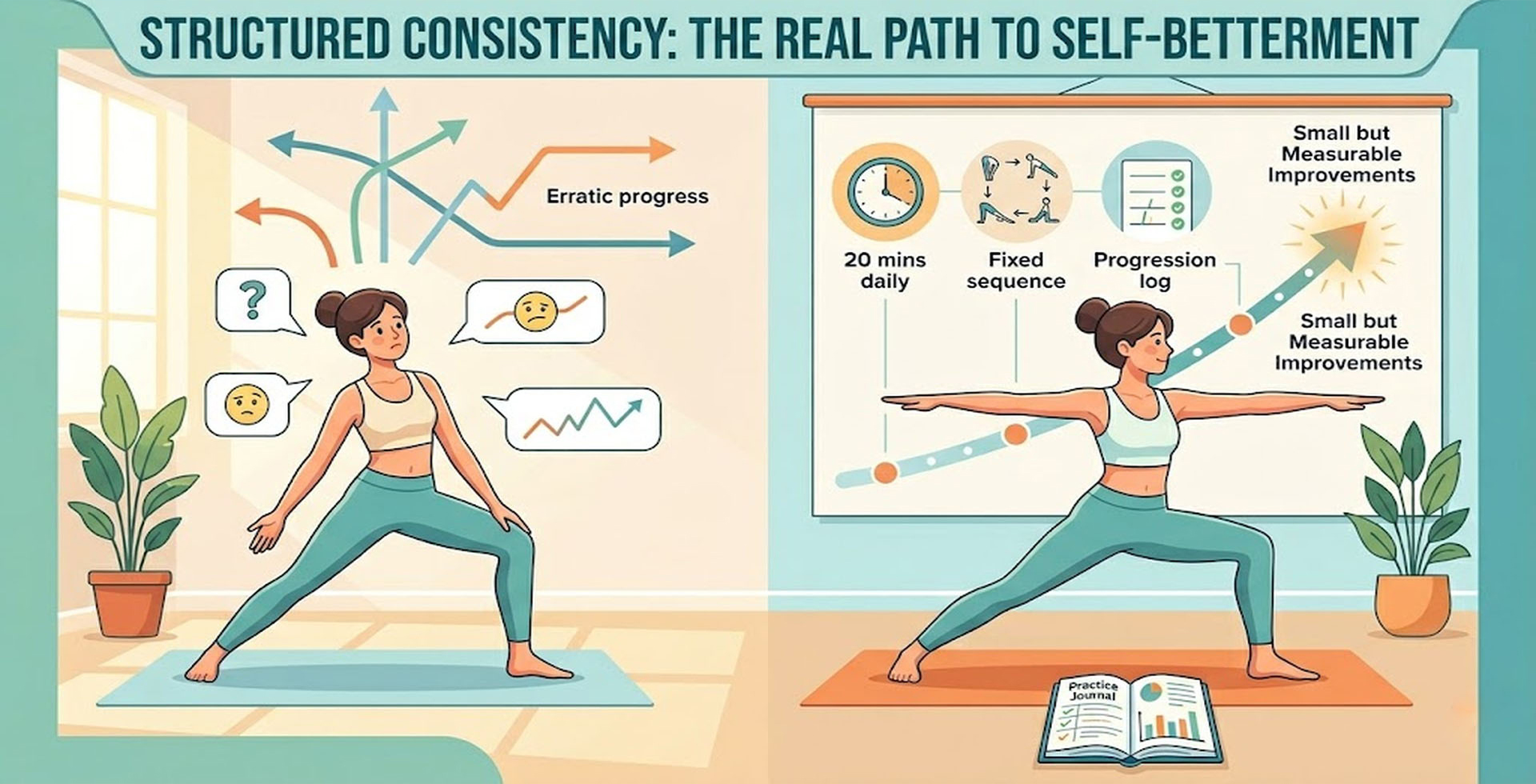
Ten minutes daily with sincerity is more powerful than practicing intensely once a week. Pranayama works through gradual nervous system conditioning and energetic balance.
7. Practice in a Clean and Quiet Environment
Fresh air, minimal distractions, and a peaceful atmosphere improve concentration and breath quality. Early morning natural environments are especially supportive for pranayama.
8. Coordinate Breath with Awareness
Pranayama is not mechanical breathing. Keep awareness on the flow, temperature, rhythm, and movement of the breath. When awareness and breath unite, the mind naturally becomes meditative.
9. Learn Advanced Practices Gradually
Techniques involving kumbhaka (breath retention), Bhastrika, or Surya Bhedana should be approached carefully and preferably under guidance. Building foundation first prevents imbalance and strain.
10. End with Silence and Observation
It’s always advisable to keep Bhramari pranayama practice at the last which gradually shifts person to the state of silence .
After pranayama, sit quietly for a few minutes. Observe the stillness, sensations, and mental clarity created by the practice. This silent absorption is where deeper transformation begins.