Yoga for Decision Fatigue: Clearing Mental Overload through the Body
In current times, it is often seen that many people suffer from stress-induced disorders. In simple terms, stress is the body’s response to demanding situations. With today’s fast-paced lifestyle, there is a constant bombardment of experiences. These can range from simple tasks like replying to emails or navigating traffic, to more challenging situations such as health issues and financial difficulties.
We are required to respond at multiple levels throughout the day.
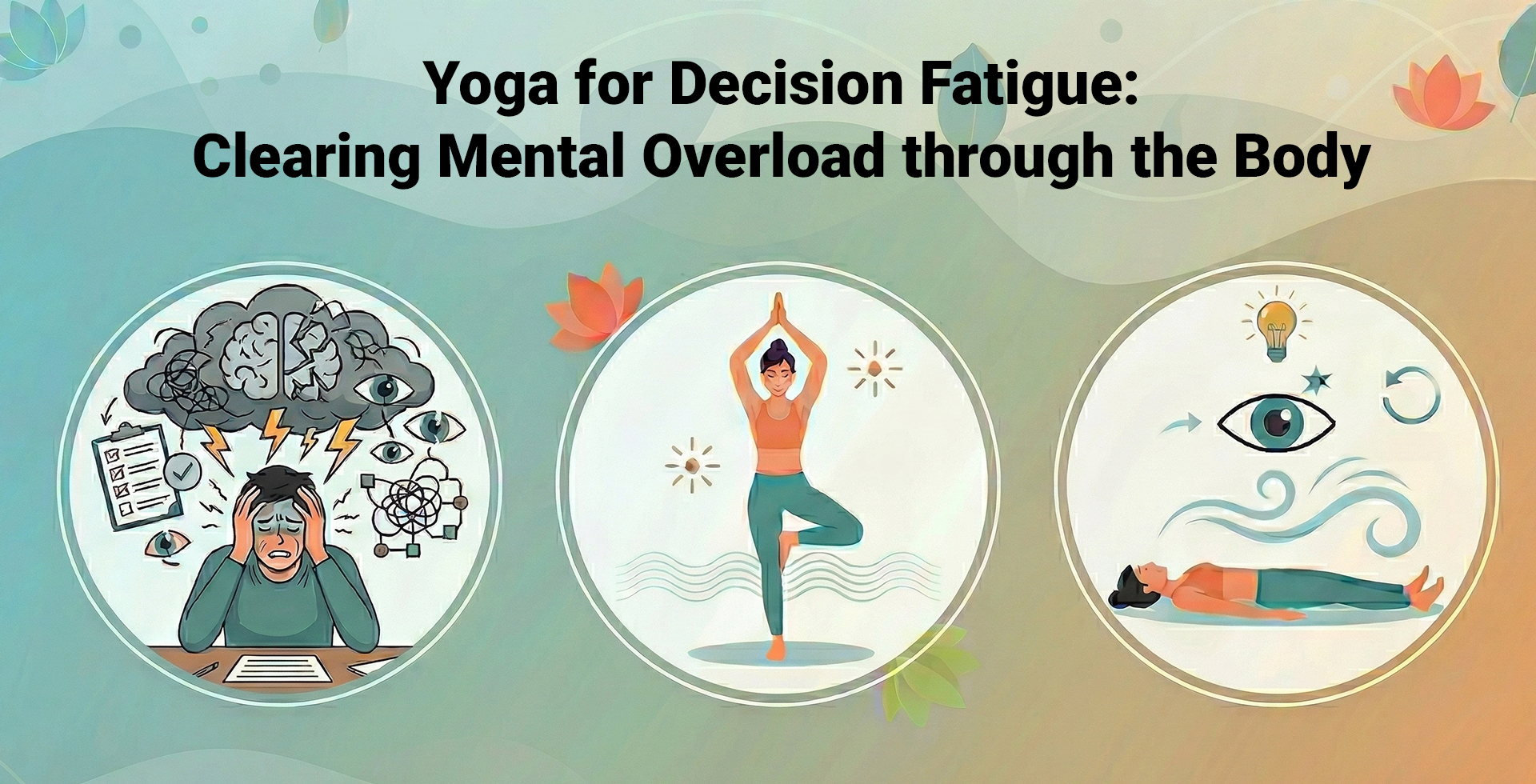
This hyper-alert lifestyle keeps us in a continuous state of “fight or flight.” As a result, we lose awareness, leading to mental fatigue. Too many choices, multiple responsibilities, excessive burdens, and emotional demands often lead to mental fatigue and breakdown.
Common symptoms observed include:
Procrastination
Confusion
Irritability
Short temper
Overthinking small issues
Difficulty in making simple decisions
A sense of mental heaviness even after rest.
In yogic language, this state is referred to as Manovega (मनोवेग). In such a condition, we begin to perceive and identify everything through the lens of Kleshas (क्लेश):
Avidya (अविद्या) – Ignorance
Asmita (अस्मिता) – Ego (I-ness)
Raga (राग) – Attachment (likes)
Dvesha (द्वेष) – Aversion (dislikes/hatred)
Abhinivesha (अभिनिवेश) – Fear of loss or death
These Kleshas cloud our Viveka (विवेक)—the ability to discriminate between what is beneficial and what is not.
Without this clarity, we tend to make poor choices in different aspects of life—whether it is the food we consume, the activities we engage in, or the thoughts we entertain. This creates a disturbance in Aahara (आहार – diet), Vihara (विहार – lifestyle), and Vichara (विचार – thought patterns), eventually leading to various health issues and a disturbed personality.
On a physical level, stress manifests in the body through symptoms such as:
Tightness in the forehead, jaw, and neck
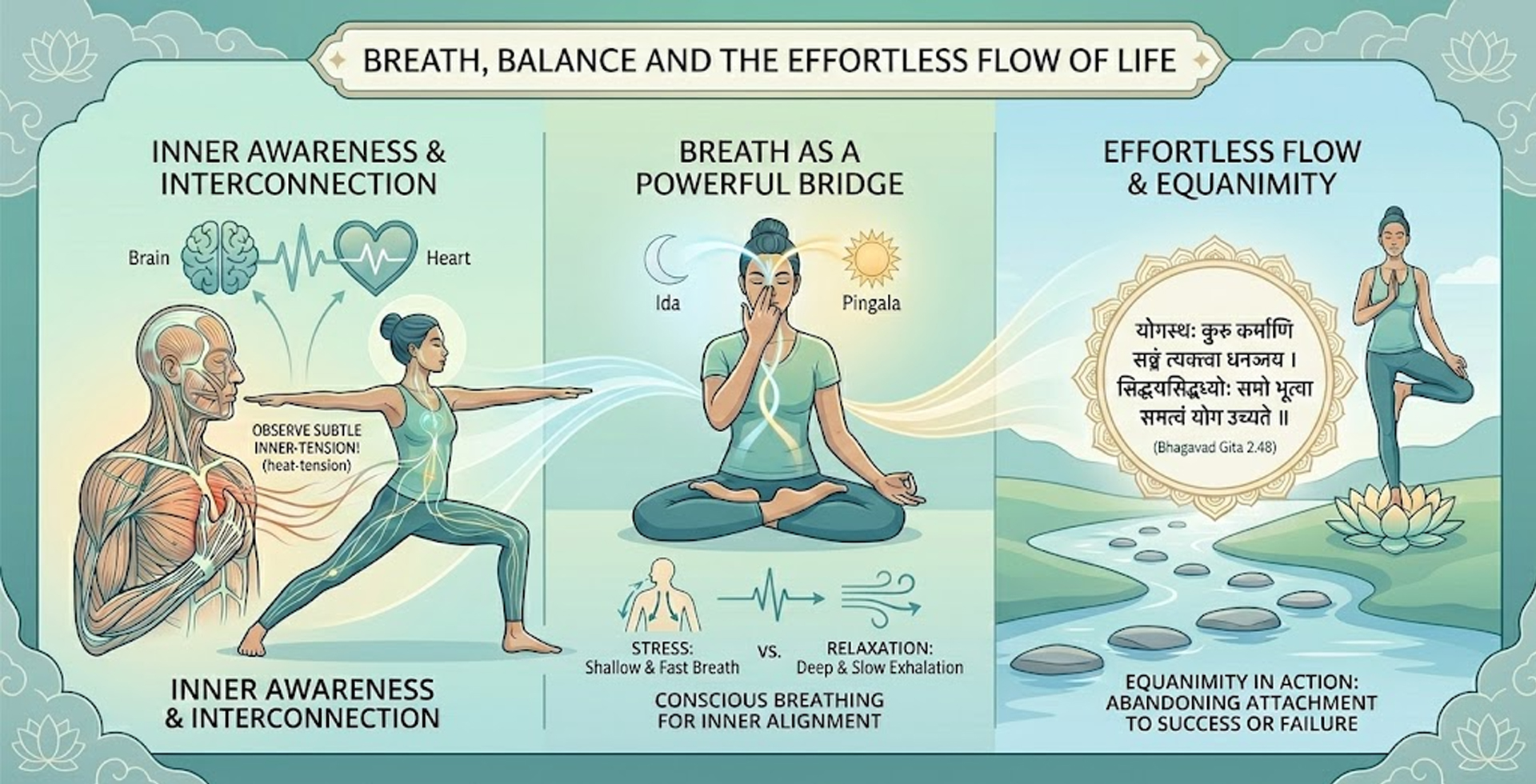
Shallow or improper breathing
Restlessness in the body, even in stillness
The science of Yoga offers solutions at multiple levels to address this condition. Regular practice and the adoption of yogic principles not only reduce stress but also enhance the overall quality of life.
A Simple Yogic Module to Manage Stress
1. Forward Bending Asanas
Why they work:
Stimulate the parasympathetic nervous system (rest-and-digest mode)
Reduce mental agitation
Draw attention inward, reducing external overload
Calm the mind
Practices:
Padahastasana
Prasarita Padahastasana
Paschimottanasana
Janu Shirshasana
Shashankasana
2. Balancing Poses
Why they work:
Bring the mind into the present moment
Develop awareness
Reduce distraction
Improve neuromuscular coordination (mind-body alignment)
Enhance focus
Practices:
Vrikshasana
Pranamasana
Garudasana
3. Slow Breathing Practices
Why they work:
A longer exhalation activates the vagus nerve
Sends a signal of safety to the brain
Reduces anxiety and mental clutter
Practices:
Abdominal breathing in Shavasana
Sectional breathing
Anuloma Viloma
Box breathing
4. Trataka (Gaze Meditation)
Why it works:
Trains one-pointed focus (Dharana)
Reduces scattered thinking
Improves clarity in decision-making
Emphasizing these practices regularly can help clear mental clutter and create inner space. This space allows awareness to arise, enabling better choices in daily life.